
2025 Election Recap Part II:
Continuing A Rundown Of The 2025 Elections

Feel free to keep tabs on this research manual and strategy guide for the pro-democracy movement on Substack, Medium, and LinkedIn, including past pieces on the 2024 Autopsy, Bench-Building, DOGE News, Project 2025 Authoritarianism, Progressive Populism, and more (First Come, First Serve!).
Now to catching up on the news:
Call it stunning to see the gleefulness and satisfaction of the Demented Donald Trump and his White House, controlled de facto not by the increasingly aging, sleepy, and senile 47th President, but by the adept puppet masters of Russell Vought and Stephen Miller, in intentionally inflicting pain and suffering on the American people during this unprecedented government shutdown, whether through another round of mass firings, a defying of court orders to fully fund the SNAP program, or shortchanging air traffic controllers resulting in flight delays and cancellations. These unprecedented actions never seen before in a shutdown are by choice, all while Trump parties with billionaires and vacations in Mar-a-Lago.
Community lenders, like Community Development Financial Institutions (or CDFIs) which serve low-income and rural areas, are forced to close as a result of the illegal withholding of congressionally appropriated funds by the Trump Administration.
The cancellation of renewable energy projects stall economic development in places like rural Indiana, while also increasing electricity costs in New Jersey. Democrats partially credit Trump’s attacks on offshore wind for Jack Ciattarelli’s sudden collapse in the NJ gubernatorial race.
As rumors swirl about government bailouts for AI companies, it is worth linking several things together. One, the political and economic power of the corporate and tech elites around the Trump White House. Two, the threat AI poses to millions of white-collar and blue-collar jobs in our economy without the responsible leadership and guardrails in place. And three, how AI data centers and crypto mining proliferation will dramatically increase electricity and utility prices and deplete resources dramatically, including water. For all the fear-mongering about “socialism” in the Democratic Party, Republicans still happily embrace government-sponsored socialism for the wealthy and well-connected on our backs.
Which ties into the affordability theme. Democrats can have a populist winning message by calling out the concentration of wealth and ownership by the American Oligarchy, by cracking down on monopolization and consolidation in agriculture and industry, by taking on price-gouging corporations ripping Americans off on groceries, by building more affordable housing and cracking down on algorithmic price fixing and other bad practices by large corporate landlords, by reigning in AI data centers jacking up utility costs, by enacting universal childcare and school meals, by making the wealthy pay their fair share in taxes to fully fund government services, by expanding the use of cheaper renewable energy sources, by lowering childcare costs, by enacting universal healthcare, by building a new, fair 21st century economy, and with bolder proposals like free and fast buses and public grocery stores (the latter which already exists for the US military and appears even in parts of rural Kansas).
Utah began the construction of what critics call a forced labor camp for homeless individuals, signaling that the pilot program could expand elsewhere.
ProPublica highlights more arrests of American citizens by ICE that the agency refuses to admit in court. And look to Evanston, Illinois for how to fight back against the Trump Administration on immigration and so many other fronts.
And pass on your condolences to the family of former Newton Mayor and Naval Reserve officer Setti D. Warren, who passed away suddenly at the age of 55 this past week.
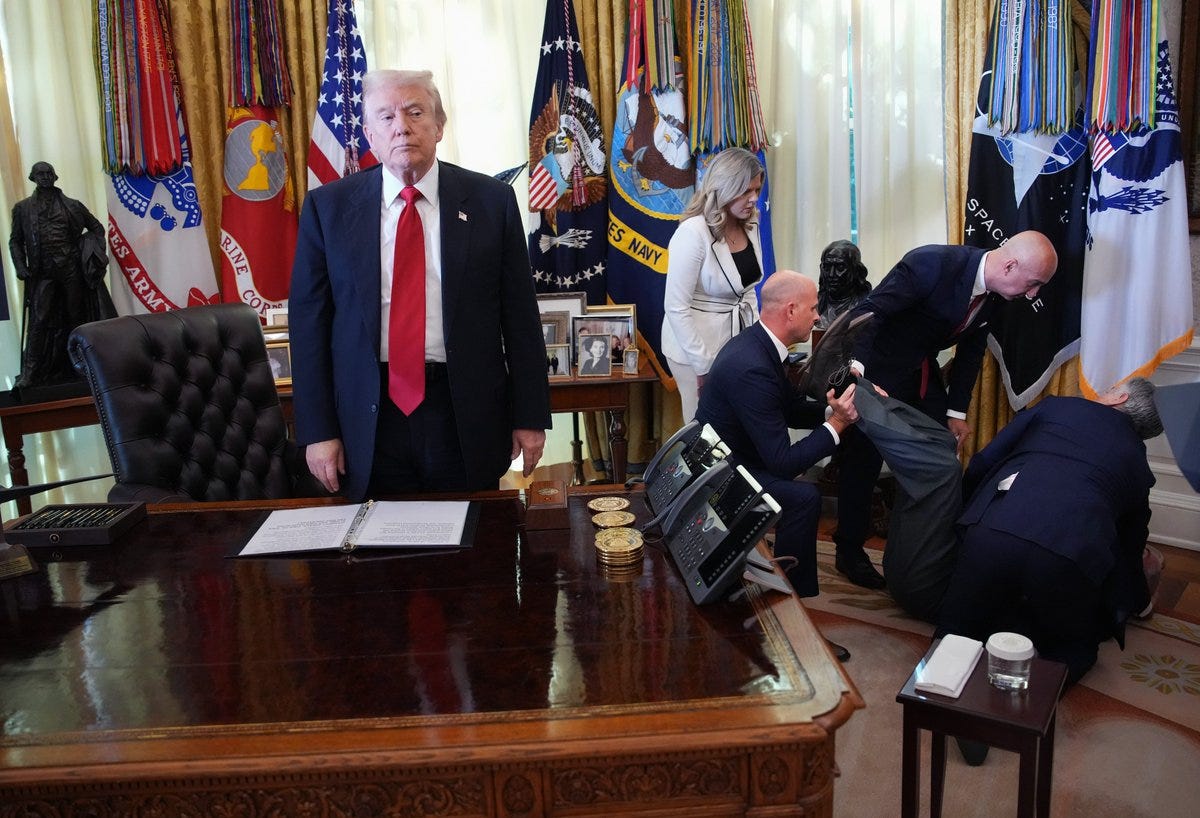
Back to Election Night 2025, a real-life demonstration of what happens when Republicans rubber stamp the oligarchy-backed, autocratic agenda coming out of Washington DC.
A lot more happened than has been reported nationally, and I certainly want to recap it all in this article.
It is worth expressing how difficult it was for the Democratic Party and the pro-democracy movement as a whole to be as successful as it was on Tuesday night. A lot changed in this country since 2024. Mainstream media outlets routinely capitulated to Trump’s demands, with some—Paramount (CBS News) particularly—purging longtime journalists and increasing pro-Trump propaganda on its airwaves and website pages to influence the flow of information. MAGA-aligned oligarchs took over and strengthened their hold on social media from X and Meta, to TikTok and more, to also control the information flow. An onslaught of Big Money in our politics continued, especially in the New York City mayoral race. Even a last minute sending of DOJ election observers into polling places in key contests.
In spite of all those challenges, we prevailed on Tuesday. But also, like I said before in my last post, more will come. CNN may be under the full wing of Donald Trump and Larry Ellison by 2026. ICE, the National Guard, and even our own military may be at polling places all across our country’s major cities. Paramilitary units like the Oath Keepers and Proud Boys may try to reinforce them. GOP elected officials will continue to try either to re-gerrymander their states further or limit access to voting in general. Maybe a declaration of martial law will be tried too. Democrats have to stay vigilant and strong, but if 2025 offers any lessons, it is that we can, and we need to, overcome those barriers. The 2026 midterms need to be “too big to rig,” however hard the Trump Regime will try to game the system early.
Added onto that, there are ways Democrats can improve even beyond these victories. Their overperformances in Rural America were still only marginal. If DNC Chair Ken Martin looked local to his own Governor Tim Walz and several of his longtime staffers and allies (who tried to revive Democratic Party rural policy and campaign desks at the DCCC and DSCC after they were killed by House and Senate leadership in the 2010 midterm bloodbath), Democrats could stand an even greater chance of expanding their footprint beyond the notable suburban and exurban gains present in 2025. A bunch of local contests this year also highlight the importance of building the bench for a 50-State Strategy of recruiting candidates even in historically difficult congressional districts and states in the country. Listening to rural and working class voices in the Democratic Party much more than we have up to now would not only make a 2026 Blue Wave probable, but inevitable.
Anyways, here are some more updates, which in short, stretch from small towns in Connecticut, to Ohio suburbs, Harrisburg, PA suburbs, all across North Carolina, in state legislature contests in key states, and all across many of our largest cities. Take notes Democrats of the lessons learned in these places for 2026:
Virginia & New Jersey Legislatures:
We now know the final balance of the Virginia House of Delegates, which is 64 Democrats to 36 Republicans in a gain of 13 seats, creating the largest Democratic majority in the House of Delegates since 1987. Most of these gains were fueled by suburban districts Kamala Harris won in 2024, although several Trump-won districts also flipped. More strikingly though, they all seem to indicate an overperformance by those legislative candidates even from how Democrats performed in 2024. That net gain is actually only two short of the 15-seat pickup Democrats attained in 2017, when Democrats started off with only 34 House seats prior to that Election Day. Goes to show how much of a positive force Donald Trump is in remaking Virginia politics.
In New Jersey, Democrats look poised to gain at least 5 State Assembly seats to attain the largest legislative majority in 52 years, which takes us back to 1973, crediting these pickups to some formerly Republican suburbs across the state.
These results indicate a very strong sign that many state legislative chambers will switch to Democratic control in 2026, including some that are not on the DNC’s official radar yet.
Additionally, Democrats broke a legislative supermajority in Mississippi’s State Senate as a result of court-ordered redistricting based on the previous maps being racially discriminatory to African Americans. No surprise, African Americans saw greater representation in the Mississippi legislature as a result. A real-life testament to the power and importance of retaining Section 2 of the Voting Rights Act at a bare, bare minimum.
And Minnesota Democrats retained their State Senate majority in special elections this past week.
All of these wins on Tuesday in tandem with the statewide victories slightly narrow the GOP’s longtime advantage on the state government level. Democrats now hold 24 governorships to the Republicans’ 26, which has redistricting implications as well. With Donald Trump’s unhinged and unprecedented fear of voters accelerating the redistricting wars and disempowering fair map advocates like myself (even though he won 14 congressional districts currently held by Democrats in 2024), it leaves many staunch MAGA allies in blue states vulnerable to becoming re-gerrymandering war casualties themselves, including those who would have easily won reelection in 2026 and 2028 under the currently fair maps. Only Donald Trump can stop the potential carnage of his own making by calling off mid-decade redistricting in GOP-controlled states for the good of his many longtime allies.
Just look at California’s Proposition 50 outperforming both the Harris and Biden numbers.

Connecticut Municipal Elections:
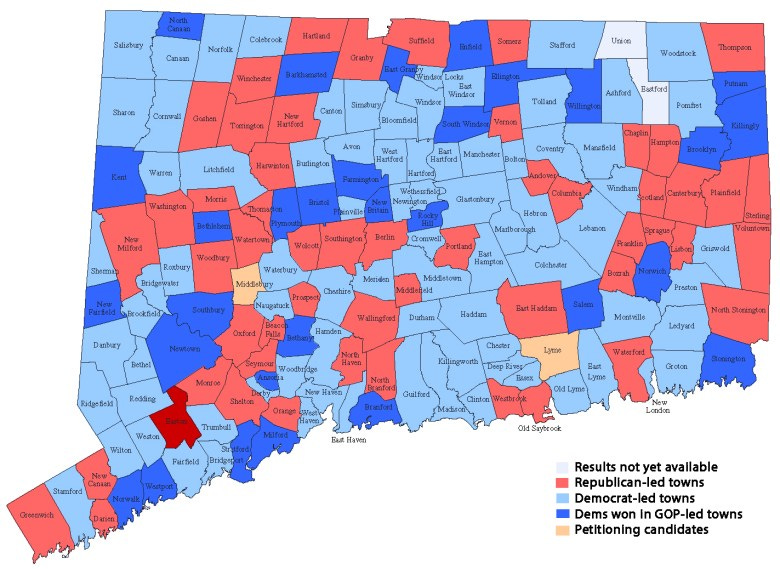
Republicans lost considerable ground in more than two dozen of Connecticut’s municipalities, from New Britain and Norwich, to Branford and Westport, and including notable upsets in Ansonia, Bristol, Stratford, and Milford. The popularity of longtime Republican mayors in a couple of heavily Democratic cities did not translate to success for their chosen candidates this year. Norwich elected the first ever Sikh mayor in the State of Connecticut.
Connecticut Public notes that similar municipal election successes in 2017 precipitated Democratic success statewide in Connecticut in the 2018 midterms.
Morris County Municipal Offices:
Morris County, New Jersey is what pundits and people like myself would call a former Republican suburban bastion. Although Trump lost it in 2020 after narrowly carrying it in 2016, he won the county again in 2024.
Well, Jack Ciattarelli lost this county by a point, despite choosing the county’s sheriff to be his running mate. The Republican mayor of Parsippany may hold onto reelection after an unexpectedly tight race on his part, but he lost a lot of Republican allies in the local government. Democrats also did well in other parts of the county like Dover, Boonton, Rockaway Township, Mine Hill, and Wharton, especially on the town council level.
Pennsylvania Municipal Elections:
In another warning sign for battleground state Republicans in the competitive Harrisburg suburbs of Cumberland County and Dauphin County, PA, Democrats swept a number of township and school board races in areas Donald Trump won just a year ago.
Trump narrowly won blue-collar, suburban Bucks County by just a few hundred votes in 2024 after barely losing it in 2016 and 2020 to Hillary Clinton and Joe Biden respectively. Well, their verdict on Tuesday kicked out two GOP law enforcement officials who sought partnership with ICE by sizable 9 to 10 point margins. Just one more indicator of how voters are feeling heading into 2026.
Furthermore, Democrats regained a majority on the Luzerne County Council for the first time since 2019 by flipping four seats on Tuesday. For context, Donald Trump won Luzerne County, home to Wilkes-Barre, by double-digits in each of his three presidential bids, after the county backed Democrats for decades going back to 1992. In 2024, Trump took 59% of the vote here to Kamala Harris’s 40%. So much for the JD Vance-Mike Johnson talk of elections in just “Democratic cities and Democratic states.” Democrats also did well in the local judicial races in Northeastern and Central Pennsylvania.
Democrats even flipped the Erie County Executive Office by a 24-point landslide in a key area of the state that backed Trump in 2016, flipped to Biden in 2020, and supported Trump again in 2024.
Ohio Municipal Races:
If anyone has more information on Ohio’s elections, please let me know. I heard Democrats did well in some of Ohio’s suburban areas on Tuesday.
Here is what I did find. Moms for Liberty candidates suffered big losses in their bids to be on the Akron Board of Education, as they did nationwide this past Tuesday.
And, nothing like to add insult to injury, which I partially get a kick out of. In Cincinnati, incumbent Mayor Aftab Pureval kicked the shit out of JD Vance’s half-brother, garnering more than 78% of the vote. Guess Couch Man is going to need a little help shoring up support for his presidential aspirations even in his home territory.
North Carolina may provide a whole set of clues for Democrats to learn from in their local races from big cities to growing suburbs and small rural towns, which gives NC Democratic Party Chair Anderson Clayton plenty of reason to crow.
NC Democrats touted big wins in the flipping of numerous mayorships, particularly Burlington, Graham, and Warsaw. Positive outcomes were touted in Salisbury and Farmville. The longtime Mayor of Wake Forest lost reelection to a Democratic candidate by a crushing 41 points. Democratic gains continued in Fuquay-Varina, Zebulon, and Holly Springs. They flipped a city council seat in Charlotte held by Republicans for more than a decade. Democrats made even more inroads in bellwether New Hanover County on the Wilmington City Council.
Upstate New York Local Races:
Although Republicans retained an advantage in Long Island’s county legislatures and municipal offices, warning signs exist for Upstate New York Republicans. Democrats flipped the Onondaga County legislature (home to Syracuse) for the first time in 5 decades, unseated Republicans in the suburbs of Rochester, and wiped out Republicans on the Troy City Council in the Hudson Valley. The Dutchess County Legislature (home to Poughkeepsie) also turned blue for the first time since 2008.
Colorado Ballot Initiative:
By a 60%-40% ratio, outperforming Harris’s 54% performance against Donald Trump’s 43% in 2024, Colorado voters passed a referendum to enact universal school meals by raising taxes on the wealthiest tax earners in the state.
New York City Council:
Even though many national Democrats avoided Zohran Mamdani like the literal plague, it doesn’t appear his months-long candidacy had a negative impact at all in Virginia, New Jersey, or downballot in New York City. Jumaane Williams won reelection as the city’s Public Advocate. City voters elected Mark Levine City Comptroller.
And, although Republicans were hoping for gains on the City Council level, they actually lost a little ground, including in the only City Council seat held by a Republican in The Bronx. One bright spot for the GOP: in parts of Queens and Brooklyn where incumbent Vickie Paladino, who called for Mamdani’s deportation, won reelection.

Miami Mayor’s Race:
Credit to The Down-Ballot here and below. A Democrat, Eileen Higgins, trounced the jungle primary competition with 36%, while the Republican, Ron DeSantis-endorsed candidate, Emilio Gonzalez, barely edged out another Democrat for the second spot in the December runoff election with 19% of the vote.
December 9 may be another indicator of whether Democrats can crack through the Latino electorate, particularly in Miami’s conservative Cuban American communities and pick up one more mayorship from Republicans this year.
Detroit City Races:
Corporate Democrat and Gina Raimondo ally Mike Duggan, now running for Michigan Governor as an Independent, secured victory for his chosen successor to become the next Mayor of Detroit.
However, in Detroit’s City Council for the open 7th District, progressive organizer Denzel Anton McCampbell clobbered Karen Whitsett, a state lawmaker who says she will no longer caucus with the Michigan Democrats, by a 59%-41% margin. She is likely to face a primary challenger for her own legislative seat next year.
Minneapolis Mayor:
It appears State Senator Omar Fateh fell just short of unseating Mayor Jacob Frey, who had tremendous institutional support in Minneapolis, in what might be to some a closer 50%-44% race; even though progressives retained control of Minneapolis’ City Council for the coming years.
St. Paul Mayor:
St. Paul will have a new Mayor, narrowly unseating Melvin Carter, once thought of as a rising star in his state’s Democratic Party. The challenger, State Rep. Kaoly Her, a former policy director for Carter, who launched her campaign only three months ago, will become the first Hmong American mayor in the city’s history, showcasing a broad appetite in the electorate for new voices and major discontent with the current political climate today in both parties.
Seattle Races:
While the Mayor’s race continues to be too close to call, other down ballot elections indicate a shift in governance from corporate and business-friendly politicians. The so-called “centrist” Seattle City Council President is on track to lose reelection handily, as is Seattle’s incumbent City Attorney, highlighting the importance of downballot candidates and infrastructure on the city council and state legislative levels assisting progressives running for higher offices like Mayor, House, Governor, and Senate in 2026.
Jersey City Mayor:
Andrew Cuomo wasn’t the only former scandal-plagued Governor to seek a political comeback. New Jersey’s own Jim McGreevey sought one of his own to become the next mayor of Jersey City, the second largest city in the state home to many Puerto Ricans, Arab Americans, Filipino Americans, Indian Americans, Vietnamese Americans, and Korean Americans.
McGreevey, who resigned after a major sex scandal in 2004, and heavily scrutinized for his close ties to Charles Kushner and the entire Kushner Family, advanced to the December 2 runoff. However, he came in second to Councilmember James Solomon, who earned the most votes in the jungle primary and currently receives support from local New Jersey progressive organizations like the NJ Working Families Party.
And like before, send me a tip if you know of more contests you would like me to highlight on this blog.
What a job, Mike! A recap to top all recaps!